Quick answer
There is no credible evidence that Powerball is rigged. The numbers come from two mechanical machines with no internet connection, using ball sets picked at random from a locked vault that can only be opened with lottery security, a multi-state lottery representative and an independent auditor present, and the entire drawing is recorded. Most “rigged” theories online come from real patterns with ordinary explanations, like more winners when more tickets are sold.

Search “is Powerball rigged” and you land in a wall of Reddit threads, TikTok clips and YouTube comment sections. The suspicion is understandable: the jackpot odds are about 1 in 292.2 million, prizes are enormous, and most people never see how the drawing works. So we did the homework. We read through the most repeated questions and claims across forums and social media, grouped them into eight themes, and checked each one against how the drawings are actually run. No usernames, no screenshots, just the questions and the documented answers.
How a Powerball drawing actually works (the 60-second version)
Before the questions, the facts most threads skip. According to a detailed look at drawing security published by LotteryUSA, most Powerball drawings happen in a small TV studio inside the Florida Lottery headquarters in Tallahassee, on Monday, Wednesday and Saturday at 10:59 p.m. Eastern (see our Powerball drawing days guide for the full schedule).
- Machines: several drawing machines are kept in a vault; two are chosen at random before each drawing. They are mechanical and analog, with no internet connection, and they are tested before every draw.
- Balls: the vault holds four ball sets, and nobody knows in advance which one will be used. The sets are checked by a state lab for weight, size and density, and the balls can be X-rayed to confirm nothing is inside.
- The vault: it takes two keys and at least three people to open it: a lottery security agent, a Multi-State Lottery representative and an independent auditor.
- The draw itself: a full rehearsal runs just before the official drawing, the whole process is recorded, and the studio is under 24-hour camera surveillance monitored from the Multi-State Lottery Association’s offices in Iowa.
What forums ask vs. what the sources confirm
| What people ask online | What the sources confirm |
|---|---|
| “The draw is fake or pre-recorded” | Live studio drawing, recorded and monitored, with an independent auditor present |
| “Jackpots only get won when they’re huge” | Bigger jackpots sell far more tickets, so more combinations are covered |
| “The lottery knows which numbers nobody played” | Sales data exist, but the balls are drawn by a physical machine nobody steers |
| “The balls are weighted” | Ball sets are lab-tested for weight, size and density and can be X-rayed |
| “Quick picks never win” | Same odds as hand-picked lines; the draw cannot tell them apart |
| “A delayed draw means something shady” | Drawings wait until every lottery has finished processing its sales |
| “The same numbers keep coming up” | Short-term streaks are normal in random data; over decades frequencies even out |
| “It’s been rigged before” | One insider case involved computer-drawn smaller games, not the live ball draw |
1. “The drawing is fake or pre-recorded”
This is the most common claim in comment sections, usually because the drawing feels short and polished on video. What is documented: the draw takes place in a real studio with observers behind a glass window, after a dress rehearsal, with an independent auditor involved from the moment the vault opens. The entire process is taped so any problem, like a ball sticking in the tube, can be reviewed. You can watch the drawing on the official Powerball website and check the result on your state lottery’s site, which our guide on how to check lottery numbers walks through.
2. “Jackpots only get won when they’re huge”
The pattern is real; the explanation is ordinary. Each ticket has the same odds every draw, but ticket sales explode when the jackpot climbs into the hundreds of millions. When tens of millions of combinations are in play instead of a few million, the chance that someone holds the winning line rises sharply. We break down the math in Powerball odds: how to calculate them yourself.
3. “They pick numbers nobody played”
Lotteries do know what was sold, because sales are processed centrally. But knowing what was sold and controlling which balls fall are two different things. The draw uses mechanical machines and ball sets chosen at random, inside a vault that needs three different parties to open. There is no keyboard on a ball machine.
4. “The balls are weighted”
Ball sets are tested by a state lab for weight, size and density before use and can be X-rayed. Only authorized personnel may handle them, wearing gloves, and the set used on a given night is not known in advance. That is precisely the kind of tampering the process is designed to catch.
5. “Quick picks never win” (or “only quick picks win”)
Both versions circulate, which says a lot. The draw has no idea how your numbers were chosen, so a quick pick and a hand-picked line have identical odds. The one real difference is prize sharing: hand-picked numbers cluster on birthdays (1–31), so a win on popular numbers is more likely to be split. We compared both styles in quick pick vs. choosing your own numbers.
6. “A delayed drawing means something shady”
Delays get a lot of attention online, especially the record $2.04 billion Powerball drawing in November 2022, which was held back for hours. The rule behind it is about fairness: a drawing waits until every participating lottery has finished processing and verifying its sales, so no valid ticket is left out. A delay means a procedure was followed, not skipped.
7. “The same numbers keep coming up”
Random data is streaky. Over a few months, some numbers will appear more often and others will go quiet, which is exactly what you would expect from chance. Over decades, frequencies even out. That is why we present hot and overdue numbers as curiosity, never as prediction, in our hot and overdue numbers guide.
8. “It’s been rigged before”
This one deserves a straight answer: yes, a real case exists. A former information security director of the Multi-State Lottery Association tampered with the random-number software used for some smaller, computer-drawn games, and he went to prison for it. That case involved computer drawings, not the live ball machines Powerball uses, and it is a big reason why today’s drawings rely on physical equipment, split responsibilities and independent auditors.
What this means for the way you play
If the drawing is fair and random, then no system, app or “secret pattern” can predict it, and anyone who promises otherwise is selling a story. What you can control is the part around the draw: a fixed budget, numbers that are less likely to be shared, every ticket checked and records that keep a pool honest. That is the honest job a good tool does, and it is how we look at Atlas AI.
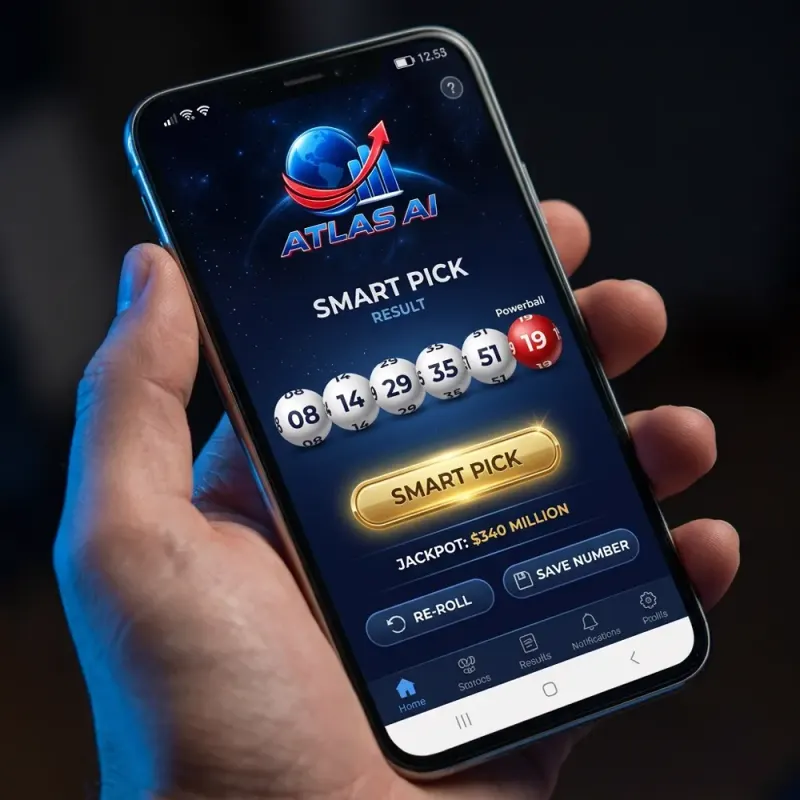
Our recommendation: Atlas AI
If you trust the drawing, the smart move is to play organized. Atlas AI Lotto Money is the tool we recommend for that. It puts Smart Pick combinations, the latest results and decades of draw history in one dashboard on your phone or computer, so picking lines takes seconds and checking them is a 30-second routine. It never claims to predict draws or improve your odds, because nothing can; it simply makes playing tidier, faster and more fun.
- Smart Pick: up to ten combinations in seconds across the full number ranges, built from draw history since 1985, so you skip crowded birthday-only picks.
- Results Panel: the latest Powerball and Mega Millions results in one place, so no ticket goes unchecked.
- Draw History and Frequency Analyzer: see for yourself how numbers spread out over decades of real draws.
- Hot & Overdue Tracker: simple charts of recent streaks, for curiosity and fun.
- 4 bonus guides included with the purchase.
Atlas AI costs $197, one payment, with lifetime access, backed by a 60-day money-back guarantee. It is a number-selection and tracking tool for entertainment. Read our full Atlas AI review or see the overview on the Atlas Numbers home page.
FAQ
Is Powerball rigged?
There is no credible evidence that Powerball drawings are rigged. The numbers are drawn by two mechanical, non-networked machines with ball sets chosen at random from a locked vault, under the eyes of lottery security staff and an independent auditor, and the whole process is recorded. Statisticians who have looked at decades of results describe them as consistent with chance.
Where is the Powerball drawing held?
Most Powerball drawings take place in a small TV studio at the Florida Lottery headquarters in Tallahassee, on Monday, Wednesday and Saturday nights at 10:59 p.m. Eastern. Backup studios elsewhere have been used when hurricanes closed the Florida building.
Has a lottery ever been rigged?
Yes, once in a well-known U.S. case: a former security director of the Multi-State Lottery Association tampered with the software of computer random-number drawings used for some smaller games in the 2000s and 2010s, and he went to prison for it. That case involved computer-drawn games, not the live ball drawings Powerball uses, and it led to tighter controls.
Why do jackpots seem to be won when they get huge?
Because many more tickets are sold when the jackpot is large. Every ticket has the same odds, about 1 in 292.2 million for the Powerball jackpot, but with far more combinations in play, the chance that someone somewhere holds the winning one rises sharply.
Are quick picks less likely to win?
No. A quick pick and a hand-picked line have exactly the same odds, because the draw does not know how the numbers were chosen. The real difference is how often you might share a prize if your hand-picked numbers are popular ones, like birthdays.
Can I watch the Powerball drawing myself?
Yes. The drawings are broadcast and posted on the official Powerball website, and many state lotteries link to the video along with the official results, so you can see the balls being drawn and compare them with your ticket.
Sources (checked November 26, 2026): LotteryUSA, “How does Powerball secure drawings?” (Florida Lottery studio, vault with two keys and three parties including an independent auditor, four ball sets, lab testing and X-ray, analog machines, rehearsal, taping, 24-hour surveillance monitored from MUSL in Iowa); Journal of Accountancy, “Nothing left to chance: life as a lottery auditor” (2023); Powerball official prize chart (jackpot odds 1 in 292,201,338). Forum themes were summarized from public Reddit, TikTok and YouTube discussions; no individual posts are quoted.
Play for fun, play within a budget
The lottery is entertainment, not a plan for money. Decide on a fixed budget before you buy, never play on borrowed money and never play to win back losses. 18+ only (or the legal age in your state). Help is available 24/7 at 1-800-MY-RESET.
New here? Start at the Atlas Numbers home page.